
The Challenge of Borderless Support
For manufacturers of automatic machinery, after-sales service is no longer just a support function — it's a competitive lever. Managing an installed base spread across dozens of countries, responding to customers in their own language, reducing machine downtime, and coordinating call centers, technicians, and branches are increasingly decisive activities, especially in packaging, where complex plants are exported worldwide.
The risk, when this coordination is missing, is that service turns into a bottleneck: information scattered across emails, phone calls, spreadsheets, overseas branches, and headquarters, with context lost at every handoff and little ability to measure the effectiveness of the service.
Data, Channels, People: The Architecture of the New Service
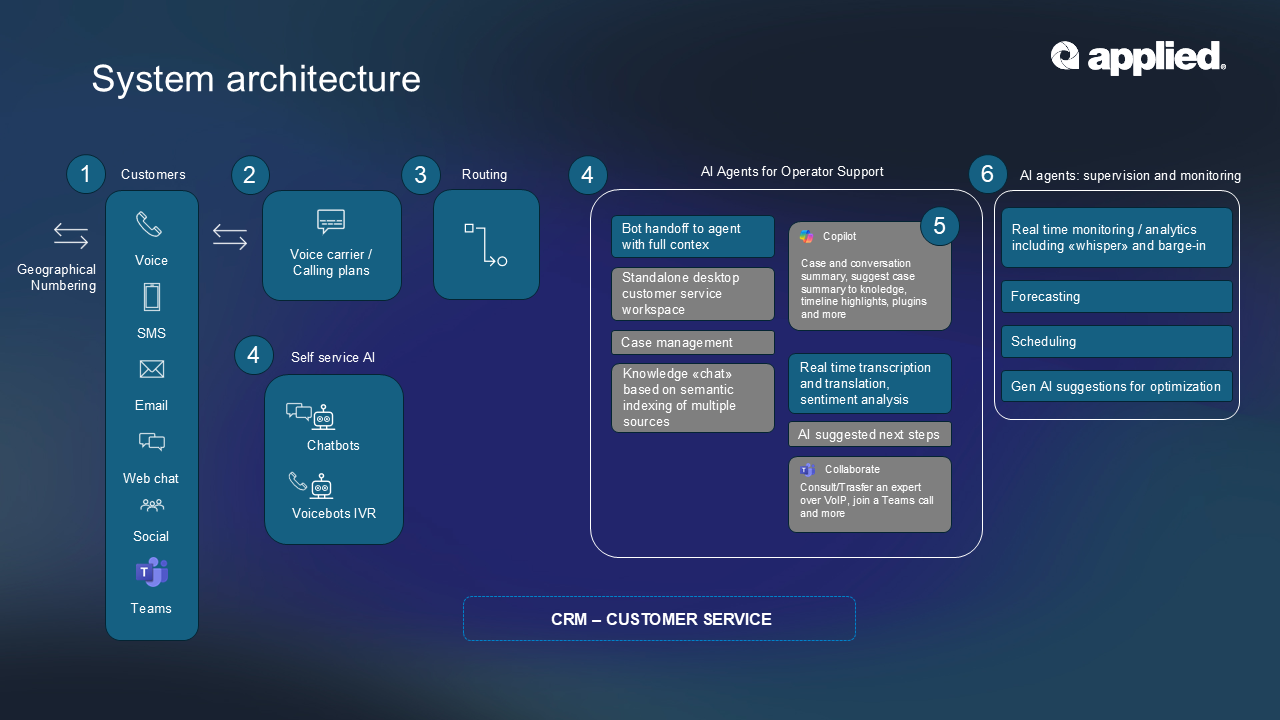
The answer to this challenge starts with structuring data, on top of which advanced contact centers, customer portals, chatbots, voicebots, guided troubleshooting, and digital spare parts management can be layered — all integrated into a single operational architecture.
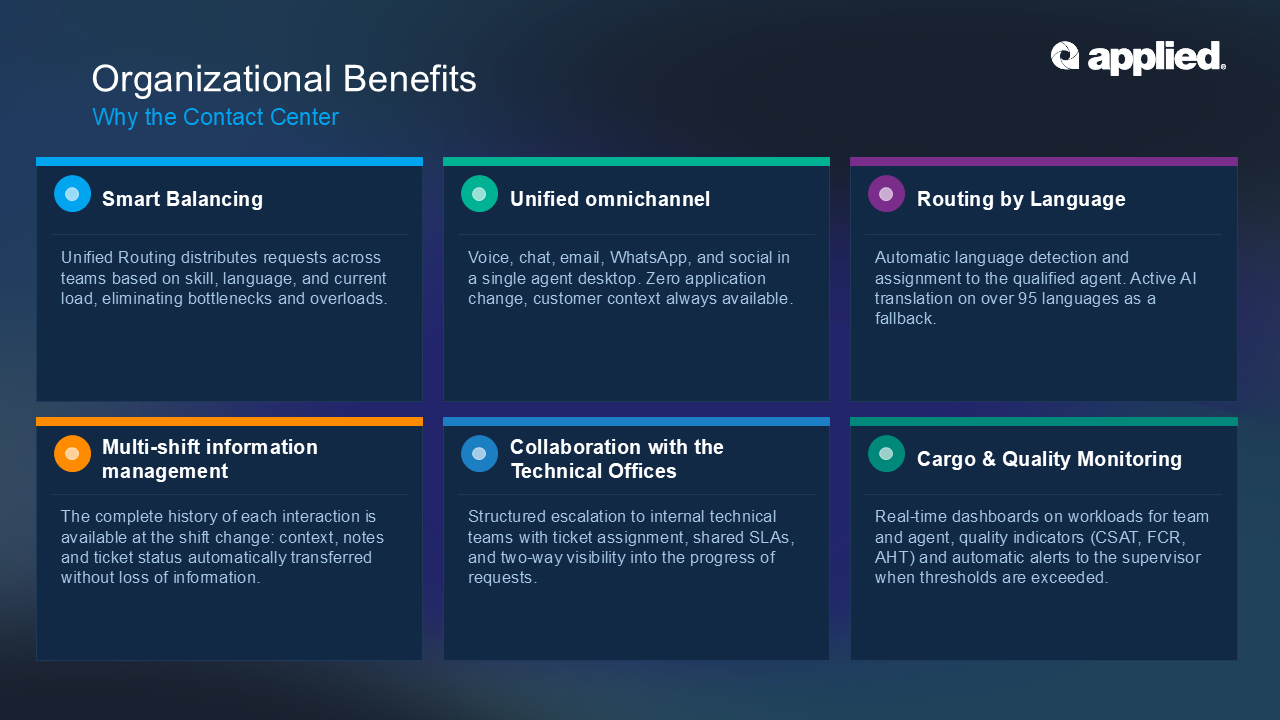
The multichannel contact center is a clear example: no longer a tool built on separate phone calls, emails, and tickets, but a platform that unifies channels, skills, and data. Customers choose the channel that suits them best — phone, chat, portal, chatbot, or voicebot — while operators work from a single view of history, tickets, and documents. What gets passed along between operators or teams isn't just the contact, but the entire context of the request, including automatic workload balancing based on language, skills, and availability.
Artificial intelligence operates on two levels: autonomously, handling simple cases through chatbots and voicebots, or in support of the operator, suggesting documents, procedures, and possible root causes. A complete ecosystem can also include a unified view of the installed base, always up-to-date technical documentation, a historical memory of problems and solutions, integrated spare parts management, personalized training paths, and real-time data analysis on stock and performance.
Best Practices to Follow
- Start with the data: structure customer, machine, and history information before introducing new tools
- Integrate, don't replace: connect existing systems (CRM, ticketing) rather than adding new, disconnected ones
- Centralize context: ensure every operator, channel, or branch accesses the same up-to-date information
- Use AI purposefully: automate simple cases and support operators on complex ones, without replacing technical judgment
- Build in modules: adopt an incremental approach, adding services (spare parts, training, analytics) over time
Goals and Benefits to Gain
For manufacturers, an ecosystem like this translates into faster response times, higher-quality support, more efficient use of internal expertise, and the opportunity to turn after-sales into a source of recurring revenue. For their customers, it means less fragmentation, greater traceability, and a point of contact that can always respond with data and context at hand.
The value isn't just in automation — it's in the ability to build value-added services on top of the machine sold: maintenance, training, upgrades, analytics, remote support. This is how customer service evolves from a support function into a strategic component of the business model.
Business applications & platform
Data platforms and end-to-end processes that drive efficiency and scalability.
